SAHELI at AICOG 2026: Highlighting priorities for collective action for women’s health
— By Dr. Hemali Heidi Sinha
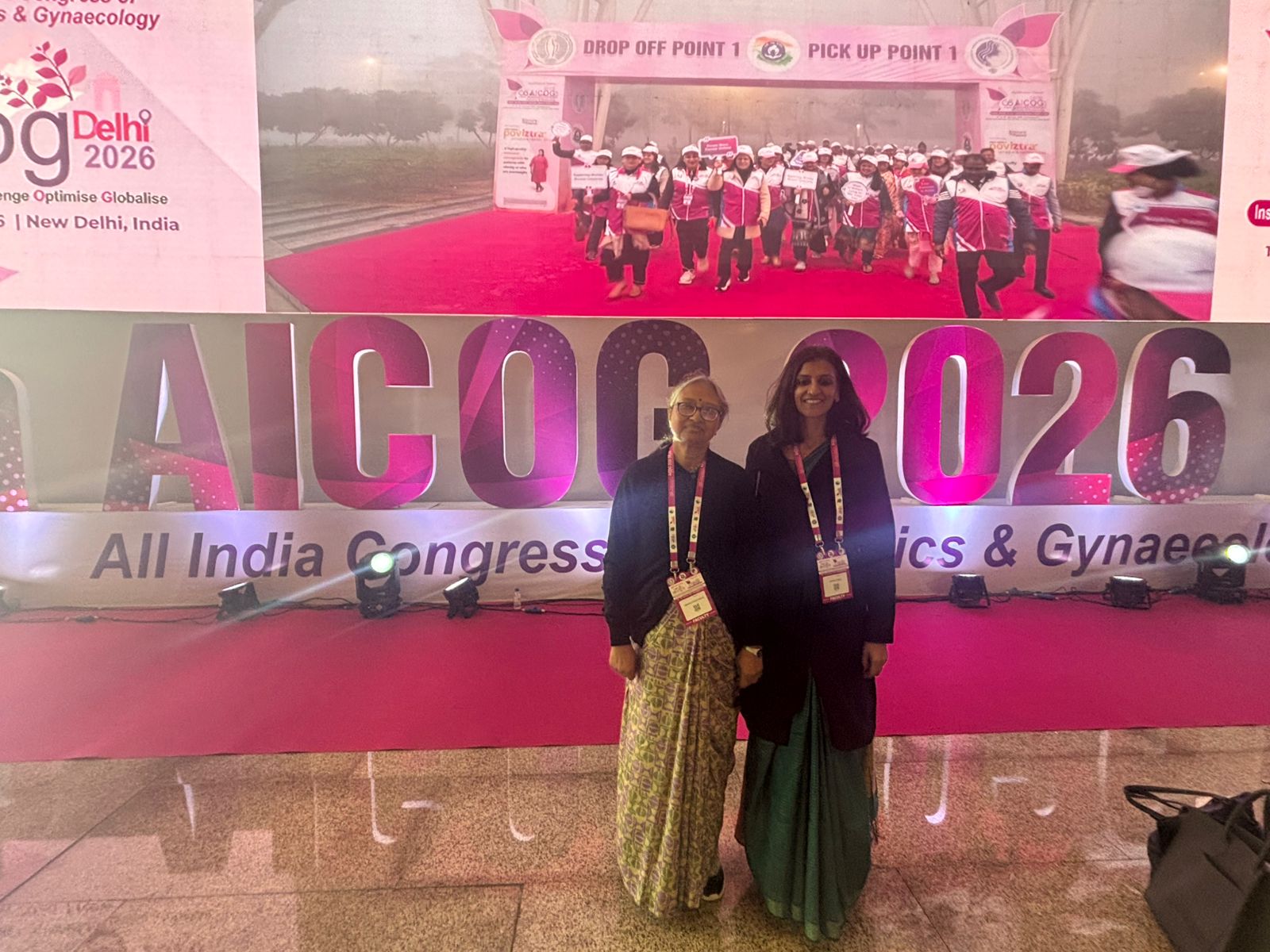
On 17th January 2026, Team SAHELI (Study and Action on Hysterectomy: Evidence on women’s health through Life course in India) participated in a one-hour scientific session at the prestigious 68th All India Congress of Obstetrics and Gynecology (AICOG) hosted by the Association of Obstetricians and Gynecologists of Delhi (AOGD) under the aegis of the Federation of Obstetric and Gynecological Societies of India (FOGSI), at Yashobhoomi, Dwarka Delhi, with the theme “Inspire, Include, Invent: Improving women’s health in India”. This mega conference was attended by over 9000 delegates.
The theme of the SAHELI session was “Hysterectomy: Priorities for Collective Action and Alternative Treatments for Women ‘s Health”. The session was chaired by the Chairperson of the Organizing Committee, Dr Ashok Kumar, the Chairperson of the Scientific Committee, Dr Neerja Bhatla and Dr Reeta Mahey, Professor of Obstetrics and Gynecology at AIIMS, Delhi. Opening remarks about the importance of this session were made by Dr Reeta Mahey.
This panel addressed multiple aspects of the problem of hysterectomy and its consequences, including exploring alternative less radical management. The magnitude of the problem was discussed as was the need for introducing and emphasizing this in the medical curriculum with possible solutions.
The session started with a talk by Dr Rupali Roy, Additional DGHS, Directorate of Health Services, Ministry of Health and Family Welfare, Government of India, who spoke on “The National Guidelines to prevent unnecessary hysterectomies”. She highlighted the salient features of the policy, including the magnitude of the problem of hysterectomy at a younger age and the importance of alternative treatment options for the various conditions for which women undergo hysterectomy. Dr Roy also shared that the Guidelines mandate Hysterectomy Monitoring Committees to be set up not only in each state but also at the district level where each hysterectomy done in women under 40 years of age was to be audited. Only a few states have formed functional committees so far and other states were being urged to constitute the Committees. She also spoke about the continuum of care from primary to the tertiary level, as outlined in the guidelines. Her talk was well appreciated with a lot of members of the audience enquiring about circulating the guidelines to each Obstetrics and Gynecological Society so that they could be read and followed.
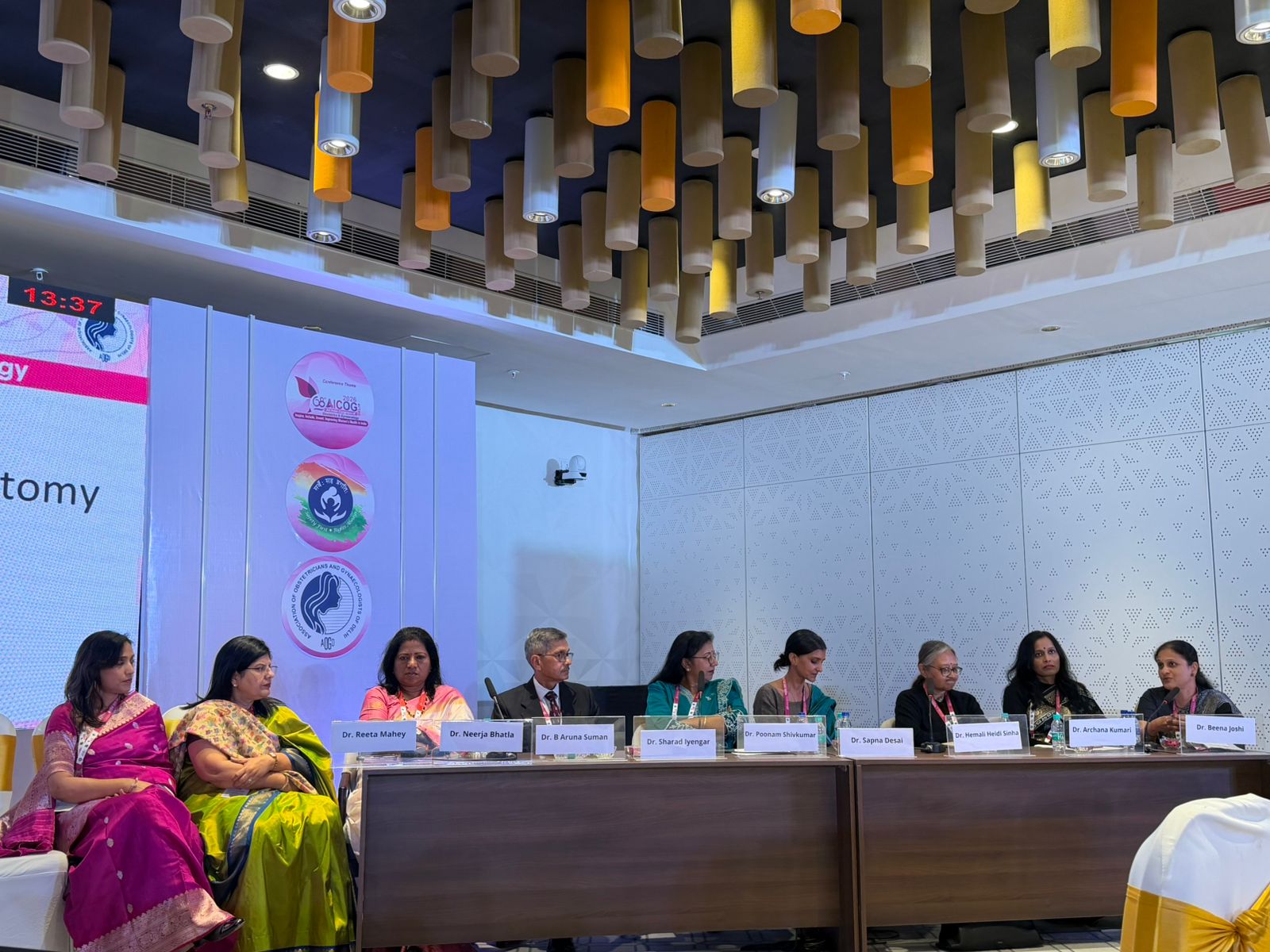
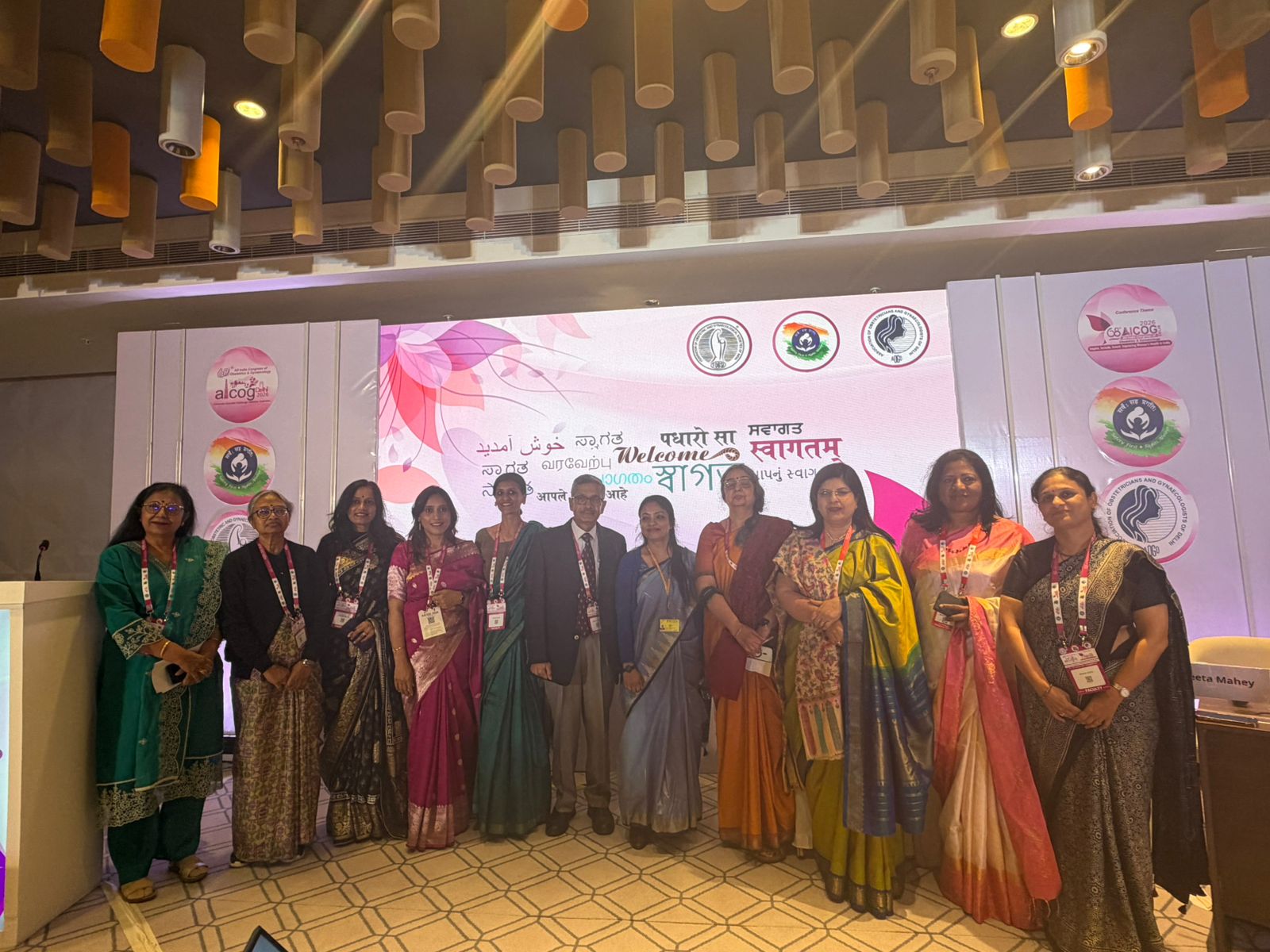
Next was a panel discussion on “Hysterectomy: Priorities and Collective action and Alternatives for women’s health”. The panel was moderated by Dr Rajani Ved from the Gates Foundation. There were seven panelists. Each panelist was asked to highlight different aspects of the subject depending on his/her field of expertise. Though the panel was large, various facets of the problem of unnecessary hysterectomies were addressed along with possible solutions.
Dr Sapna Desai, Principal Investigator of SAHELI Project spoke of her vast experience in the community and about population level data on hysterectomy and gynecological morbidity. She said that gynecological morbidity should be addressed through the life course, as women’s health includes roles beyond childbearing. The problem varies across states with pockets of high prevalence, she also emphasized the need for national data on gynaecological morbidity and to propagate alternative treatment for conditions for which women undergo hysterectomy.
Dr Archana Kumari, Associate Professor, Obstetrics and Gynecology, AIIMS, Delhi spoke of her work on a meta-analysis of 89 studies on hysterectomy, the first of its kind from our country. She found that a lot of women had undergone hysterectomy for conditions which could have been treated by less radical means and a large number of women had undergone removal of the ovaries as well, though in most cases this could not be justified. She spoke about a new format which she had expanded beyond the national guidelines, which could act as a pre audit, to examine whether this radical surgery was necessary and whether an alternative was available and had been prescribed.
Dr Poonam Shivkumar, Professor of Obstetrics and Gynecology at MGIMS, Wardha shared her experience of conducting clinical governance using a simple audit form and of offering alternative treatment to women in her rural hospital with good uptake of LNG IUS.. She felt will power and adherence to policy were critical, as well as counselling worked well. She said she had a positive experience encouraging collaboration amongst clinicians to prevent unnecessary hysterectomies.
Dr Sharad Iyengar from ARTH (Action Research and Training for Health), spoke of his mission to help women in the community access and manage health care by using research and training initiatives. He shared his experience of inserting LNG IUS in a primary care setting for contraception purposes, which also contributed to management of heavy bleeding and improvement in anaemia. He advocated a similar approach for women with gynecological morbidities, though a few members of the audience felt more work was required before this was put into action.
Dr Aruna Suman, Faculty at Government Medical College, Hyderabad shared her experience with the SAHELI women’s hotline in Telangana and felt it had a positive impact. She recounted how with the help of the hotline she directed a patient with advanced cervical cancer to the hospital for proper treatment. According to Dr Suman, women required such service to dispel their misconceptions, doubts and for guidance. She felt there was a good scope for this service as counselling for women, even in the public sector.
Dr Hemali Heidi Sinha, retired Professor of Obstetrics and Gynecology at AIIMS, Patna shared her analysis of contents of medical textbooks, in reference to chapters pertaining to conditions for which hysterectomy was commonly performed. Though only a selection of two textbooks had been analyzed, students require to be introduced to the National Guidelines through these textbooks, as well as taught communication skills along with alternative treatment options for conditions for which hysterectomy is being performed rampantly. The consequences of hysterectomy at an early age need to be emphasized.
Dr Beena Joshi, from ICMR NRRCH (National Institute for Research in Reproductive and Child Health) spoke of research priorities and support by the ICMR in Health Technology Assessment (HTA) for alternatives to hysterectomy. One of these was the use of LNG IUS for heavy menstrual bleeding, a common cause for hysterectomy. She highlighted the need for more data on the burden of gynaecological morbidity and to test treatments.
There were a lot of questions from the audience about feasibility of the LNG IUS, bringing down its cost and improving acceptability. There were queries about the National Guidelines too.
Dr Rajani Ved concluded the panel discussion emphasizing the need for collective efforts to address this problem.
Dr Neera Bhatla concluded the session and felt that youth required to be involved and sensitized about the magnitude of the problem and the alternative treatments available for hysterectomy.
Overall, the panel helped highlight that dialogue with women, not only on hysterectomy, but also on women’s health, including the possibility of a hotline was explored and its success shared, raising hope for its adoption on a national basis. Clinical audits, patient centered education, addressing myths are the need of the hour. Prescribing hormone therapy after hysterectomy, not yet a norm, needs to be propagated among providers as well as the women.
Though hysterectomy has been addressed at various levels, including the Government of India, large gaps remain on the causes and consequences, limiting the potential effectiveness of interventions at the clinical, health system and community level. These require attention through research. Professional bodies like FOGSI with over 45,000 members can make a difference.